Drug-Free Biomimetic Nanoparticles Show Promise Against Aggressive Breast Cancer

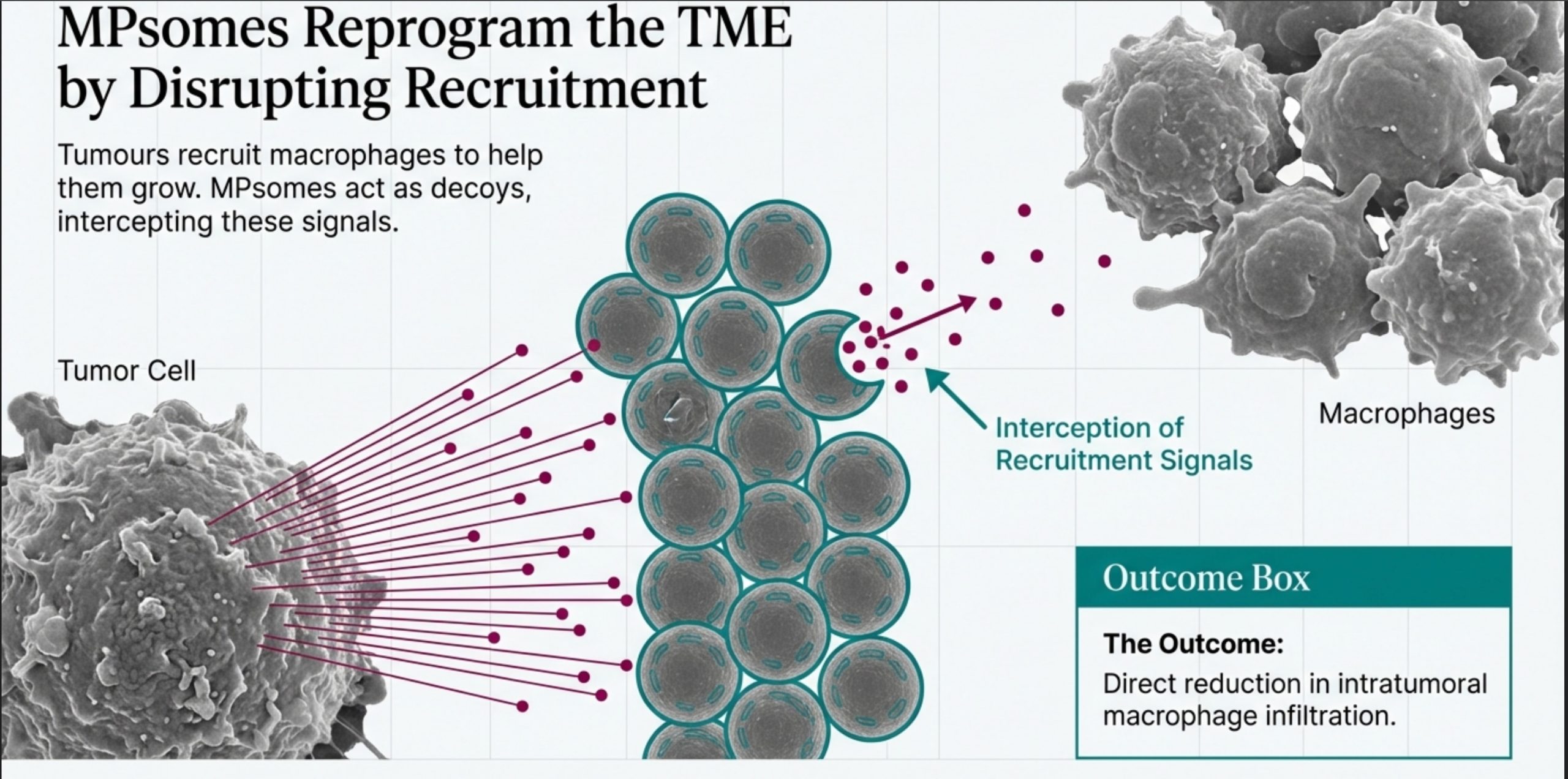
A team of investigators from the Technion Faculty of Chemical Engineering, including the graduate students Ofri Vizenblit and Rawan Mhajne and led by Dr. Assaf Zinger, developed a novel nanoparticle-based immunotherapy that suppresses tumor growth in triple-negative breast cancer (TNBC) without delivering drugs or directly targeting cancer cells. The study, published in ACS Nano, introduces "MPsomes" - macrophage-inspired biomimetic nanoparticles designed to interfere with the recruitment of tumor-associated macrophages (TAMs), key immune cells that help tumors grow, spread, and evade immune attack.
TNBC is one of the most aggressive forms of breast cancer and remains difficult to treat due to high rates of recurrence, metastasis, and therapeutic resistance. While most current therapies focus on eliminating tumor cells, the new approach targets the tumor microenvironment, where TAMs play a central role in supporting cancer progression.
The research team engineered MPsomes by incorporating membrane proteins derived from macrophages into synthetic lipid nanoparticles using a scalable microfluidic manufacturing process. The resulting nanoparticles mimic key properties of immune cells, allowing them to bind selectively to inflamed blood vessels associated with tumors. In laboratory experiments, MPsomes significantly reduced macrophage recruitment, while in animal models of TNBC they decreased TAM infiltration and markedly inhibited tumor growth.
In laboratory experiments, MPsomes significantly reduced macrophage recruitment, while in animal models of TNBC they decreased TAM infiltration and markedly inhibited tumor growth. Remarkably, their therapeutic performance was comparable to that of anti-PD-1 checkpoint immunotherapy, a widely used cancer immunotherapy.
“Our goal was to develop a therapeutic platform that harnesses the body's own biological mechanisms rather than relying on conventional drugs,” said Dr. Zinger, “By mimicking macrophages, MPsomes can disrupt the signals that attract tumor-promoting immune cells, effectively reshaping the tumor microenvironment and slowing cancer progression.”
The findings highlight a new paradigm in cancer nanomedicine: drug-free, biomimetic nanoparticles that act by modulating immune-cell trafficking. Beyond triple-negative breast cancer, this strategy could open the door to treatments for a wide range of cancers and inflammatory diseases in which immune-cell recruitment drives disease progression. If successfully translated to the clinic, such platforms may offer safer, more targeted alternatives to existing immunotherapies while reducing treatment-related toxicity.