New Study Reveals How Cells Export Toxic Proteins Linked to Alzheimer’s Disease

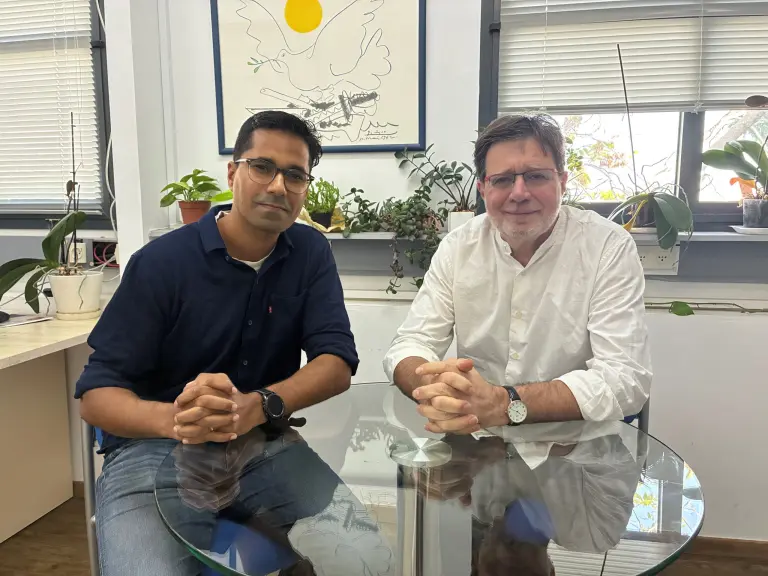
A new study by postdoctoral fellow Ajay Wagh led by Professor Michael Glickman, Dean of the Technion’s Faculty of Biology, identified a previously unrecognized way that cells may protect themselves from toxic proteins linked to Alzheimer’s disease. In this recently published study, the team reports that cells can actively remove a harmful protein variant known as UBB+1 by exporting it outside the cell, rather than relying solely on internal degradation. UBB+1 is known to accumulate in the brains of Alzheimer’s patients and interfere with normal protein quality-control systems.
The study shows that a key cellular protein, p62, acts as a molecular organizer that recognizes UBB+1 and directs it into small membrane-bound vesicles that are released from the cell through a process called secretory autophagy. When p62 is absent or dysfunctional, UBB+1 accumulates inside cells and forms toxic aggregates. This finding is especially important for neurons, which must maintain protein balance over a lifetime and are particularly vulnerable to the buildup of damaged proteins.
“Our work reveals that cells have an additional defense strategy against harmful proteins—they can actively expel them,” said Prof. Glickman added, “By uncovering how p62 controls this process, we provide new insight into fundamental mechanisms that help protect brain cells. These discoveries expand our understanding of Alzheimer’s disease at the molecular level and may inform future efforts to develop therapies that target protein toxicity in neurodegenerative disorders”.
The study was published in Proceedings of the National Academy of Sciences (PNAS) on December 9, 2025