New Study Reveals How the Aging Spleen Sabotages Immune Response: Iron "Starvation" Identified as Key Culprit

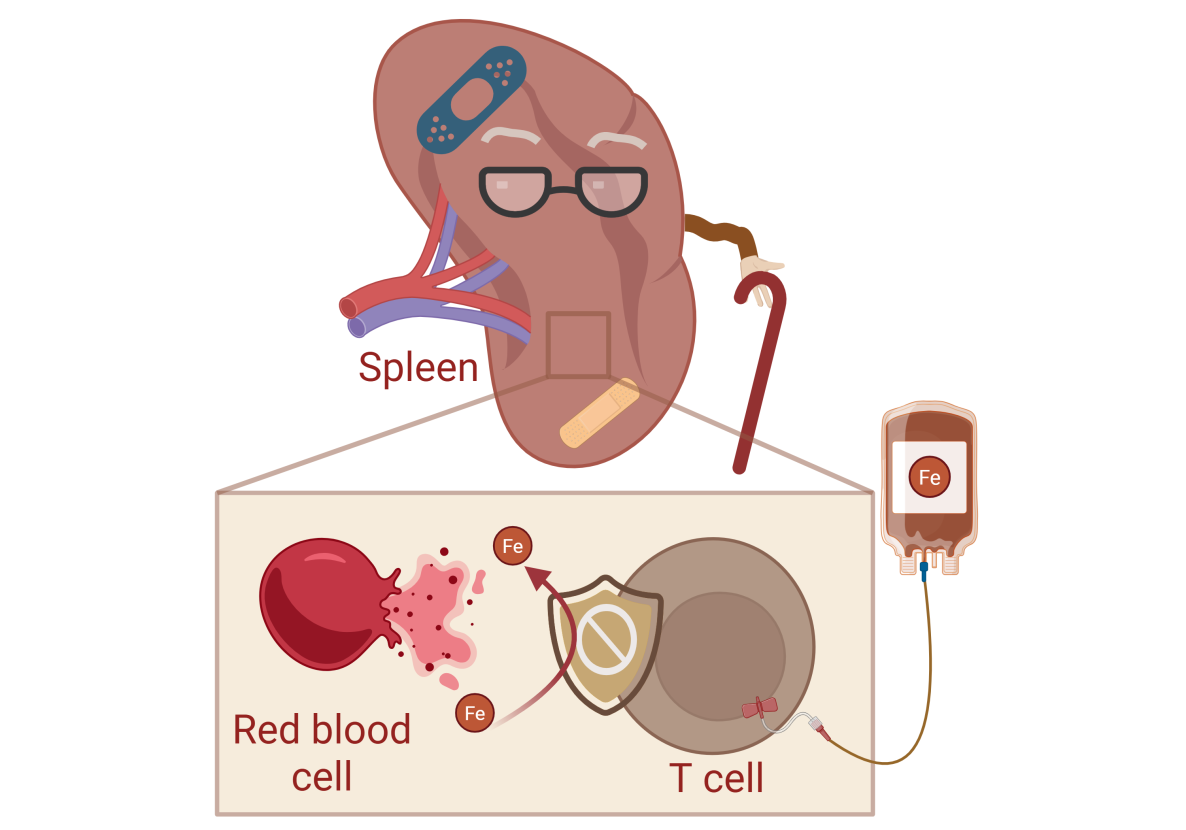
A new study led by Prof. Noga Ron-Harel from the Technion Faculty of Biology, in collaboration with Prof. Esther Meyron-Holtz from the Faculty of Biotechnology and Food Engineering, sheds new light on why the immune system weakens with age. This study, carried out by the graduate students David Ezuz, Heba Ombashe, Akmaral Rakhymzhanova, Satyarth Pandey, and staff scientists Lana Watad and Dr. Orna Atar, identified the spleen as a surprising source of T cell dysfunction. The study revealed that as the spleen creates a toxic environment filled with decaying red blood cells, immune cells are forced to "starve" themselves of iron to survive, rendering them unable to fight infections effectively.
As the global population ages, the decline in immune function—known as immunosenescence—poses a significant health challenge, leading to increased susceptibility to infections and poor responses to vaccinations. While much research has focused on the aging of the cells themselves, this new study investigates the detrimental impact of the aging tissue environment.
The "Catch-22" of the Aging Spleen
The spleen functions as the body's blood filter, responsible for recycling iron from senescent red blood cells. Previous studies found that in aged mice, the macrophages tasked with this disposal begin to fail, leading to an accumulation of toxic heme and iron deposits. The current study discovered a reciprocal interaction that drives immune failure. The toxic environment generates oxidative stress that threatens to kill T cells via ferroptosis, a specific type of cell death driven by iron. To survive this hostile landscape, T cells residing in the spleen initiate a drastic survival mechanism: they shut down their iron intake machinery. While avoiding iron protects the T cells from dying, the mineral is essential for cell division. Consequently, by shutting out iron, these T cells become functionally impaired. Thus, when the body will face a threat like a virus, these iron-deficient T cells will not multiply to mount an effective defense.
The researchers confirmed that the environment, rather than the cell's internal clock, is the primary driver of this dysfunction. T cells taken from aged spleens displayed significantly higher markers of aging and stress compared to those from lymph nodes in the same animal. Furthermore, when young, healthy T cells were transplanted into an aged spleen, they quickly adopted "aged" characteristics and ceased proliferating. Crucially, the study demonstrates that this functional impairment is reversible. By supplementing iron specifically during the activation phase, researchers were able to bypass the T cells' defensive blockade, allowing them to proliferate once again. In aged mice, administering iron specifically during the window of vaccination significantly improved the adaptive immune response and antibody production. This research suggests that the poor vaccine efficacy observed in the elderly may be partially caused by this functional iron deficiency in the spleen, opening the door to new vaccination strategies that might include temporary, targeted iron supplementation.
"Our study shows that the immune system doesn't just age on its own; it is actively sabotaged by the deteriorating environment of the spleen," said Prof. Ron-Harel. "T cells are forced to make a difficult trade-off: they adapt to the toxic, iron-rich environment by shutting down their iron intake to avoid cell death. Unfortunately, this survival strategy comes at a high cost—without accessible iron, they lose the ability to proliferate and fight infections. Importantly, we found that precisely timed iron supplementation can bypass this blockade, offering a promising avenue to boost vaccine efficacy in the elderly."
The article was published in Nature Aging on 17 October 2025